
No rigid formula
The number of implants depends on the length of the gap, its position, the bone and chewing forces.


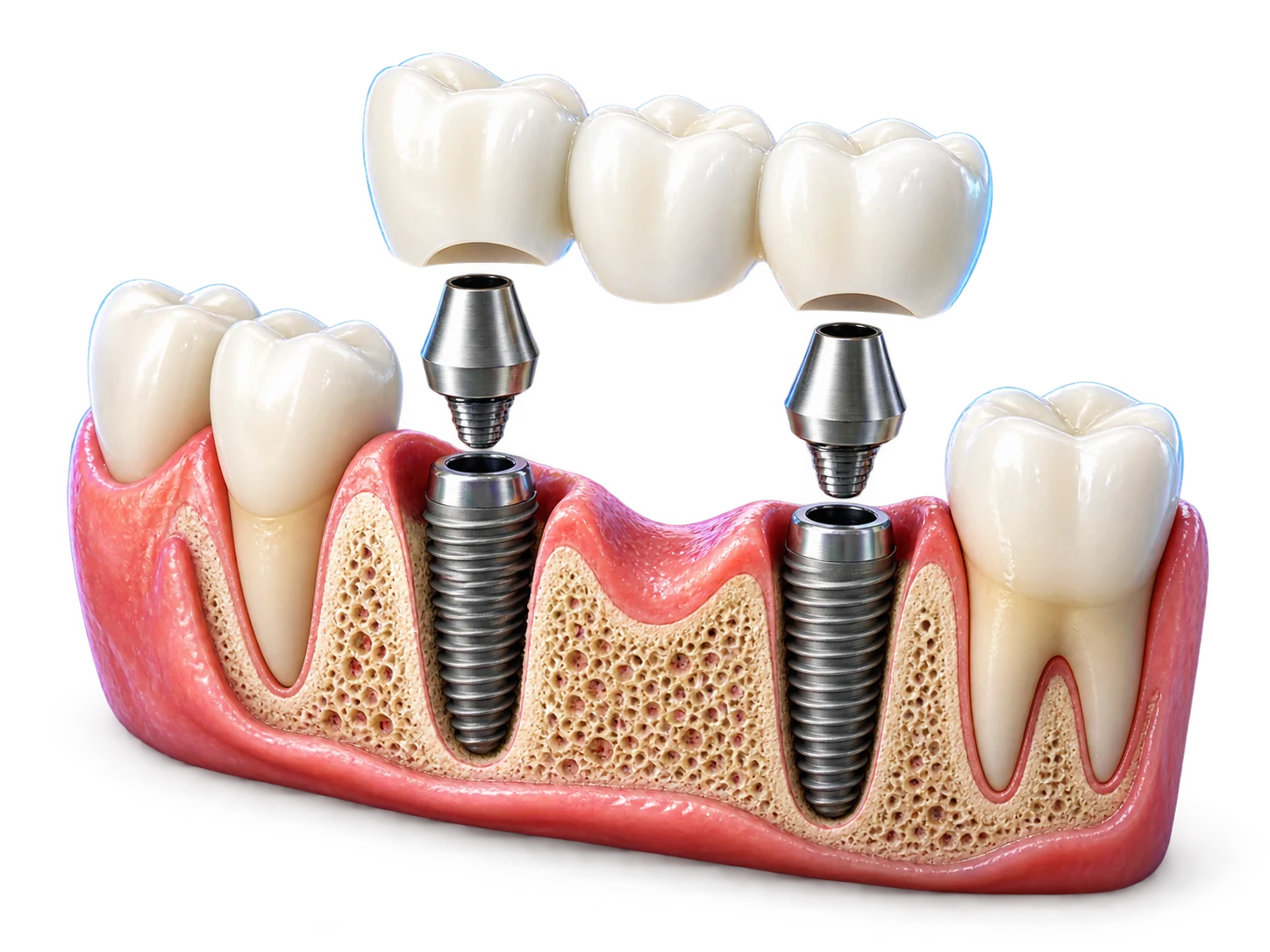
The number of implants depends on the length of the gap, its position, the bone and chewing forces.
The crowns are joined and supported by the right number of implants instead of relying on natural teeth.
The dentist optimizes the number of implants while ensuring adequate support and durability of the restoration.
Early restoration helps stop neighboring teeth from tilting and improves your smile.
Three tightly connected components restore everything from root to crown.

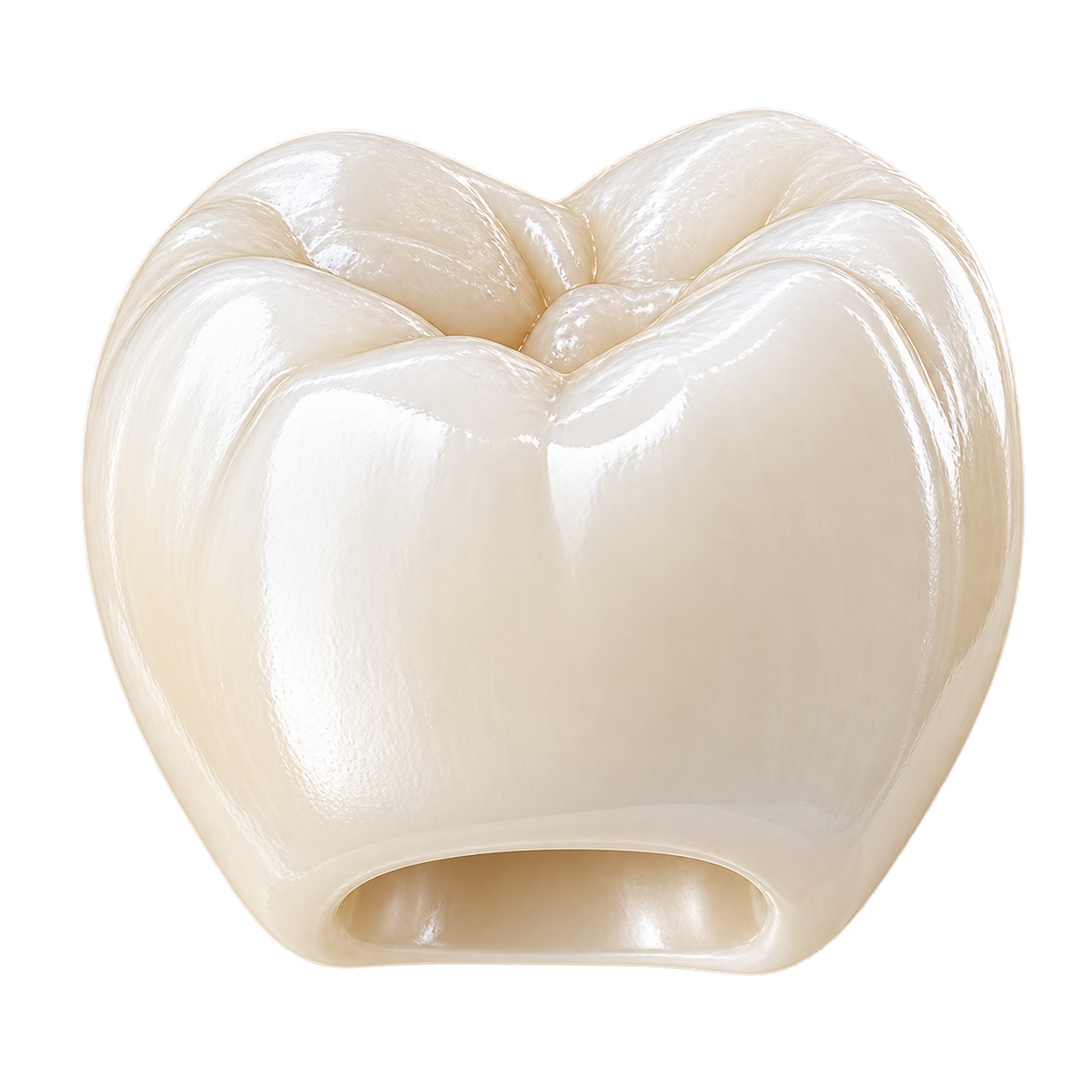
The visible part of the tooth, designed to match the color, arch shape and aesthetic goals.

The chewing surface, height and contour of the restoration are adjusted to your individual bite.

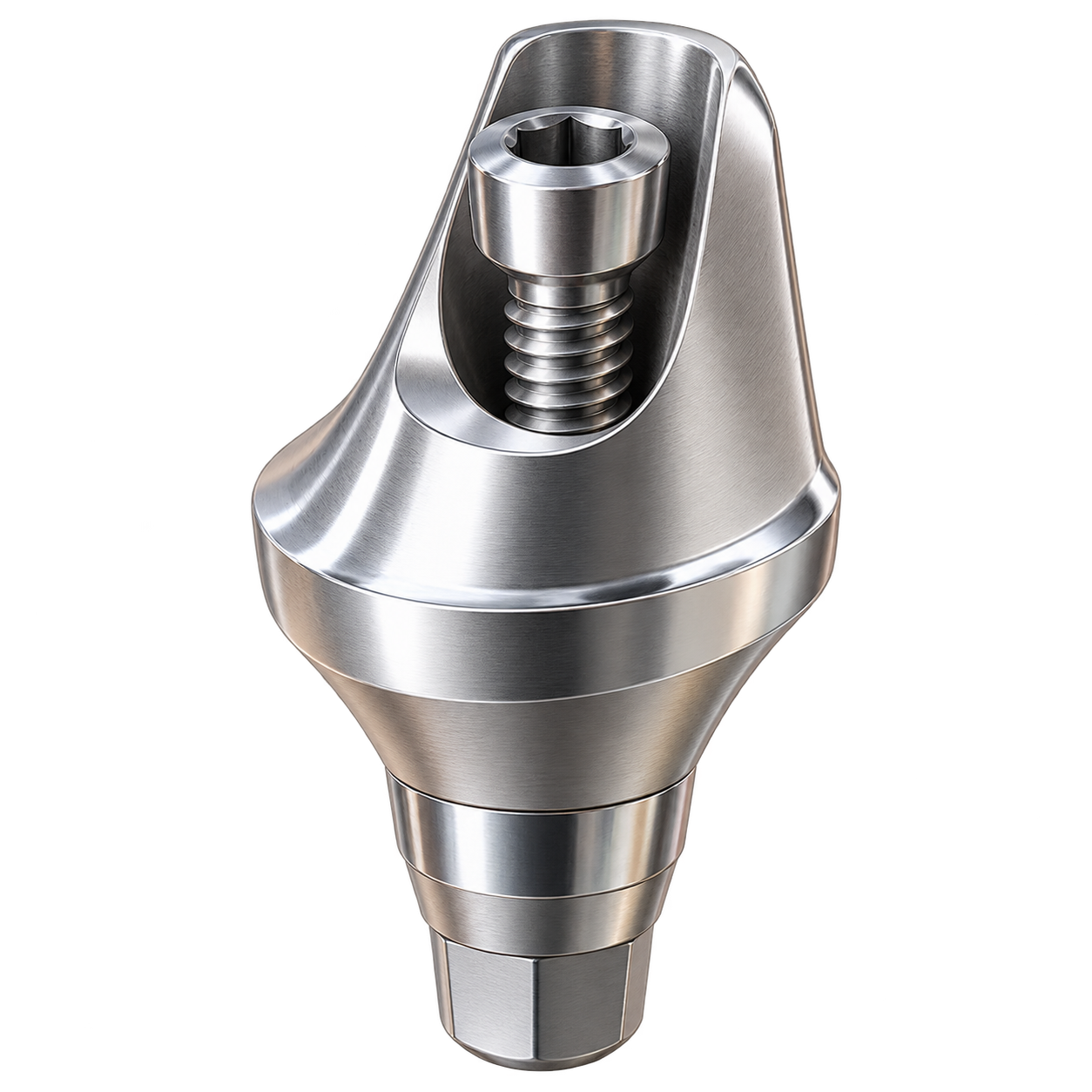
The connector that links the porcelain crown to the implant post; it can be straight or angled.
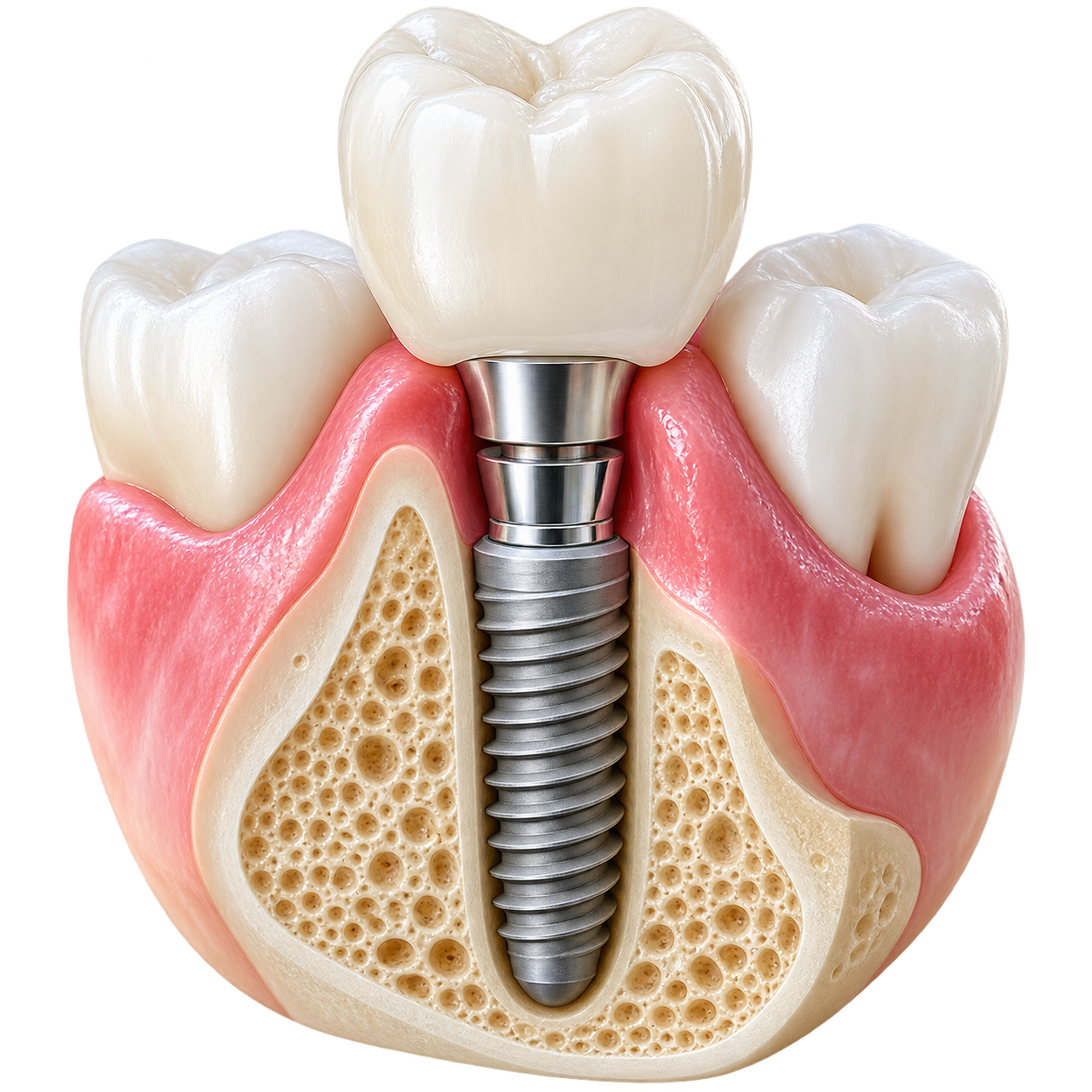

Keeps the components on the implant stable and lets the dentist check and maintain them when needed.

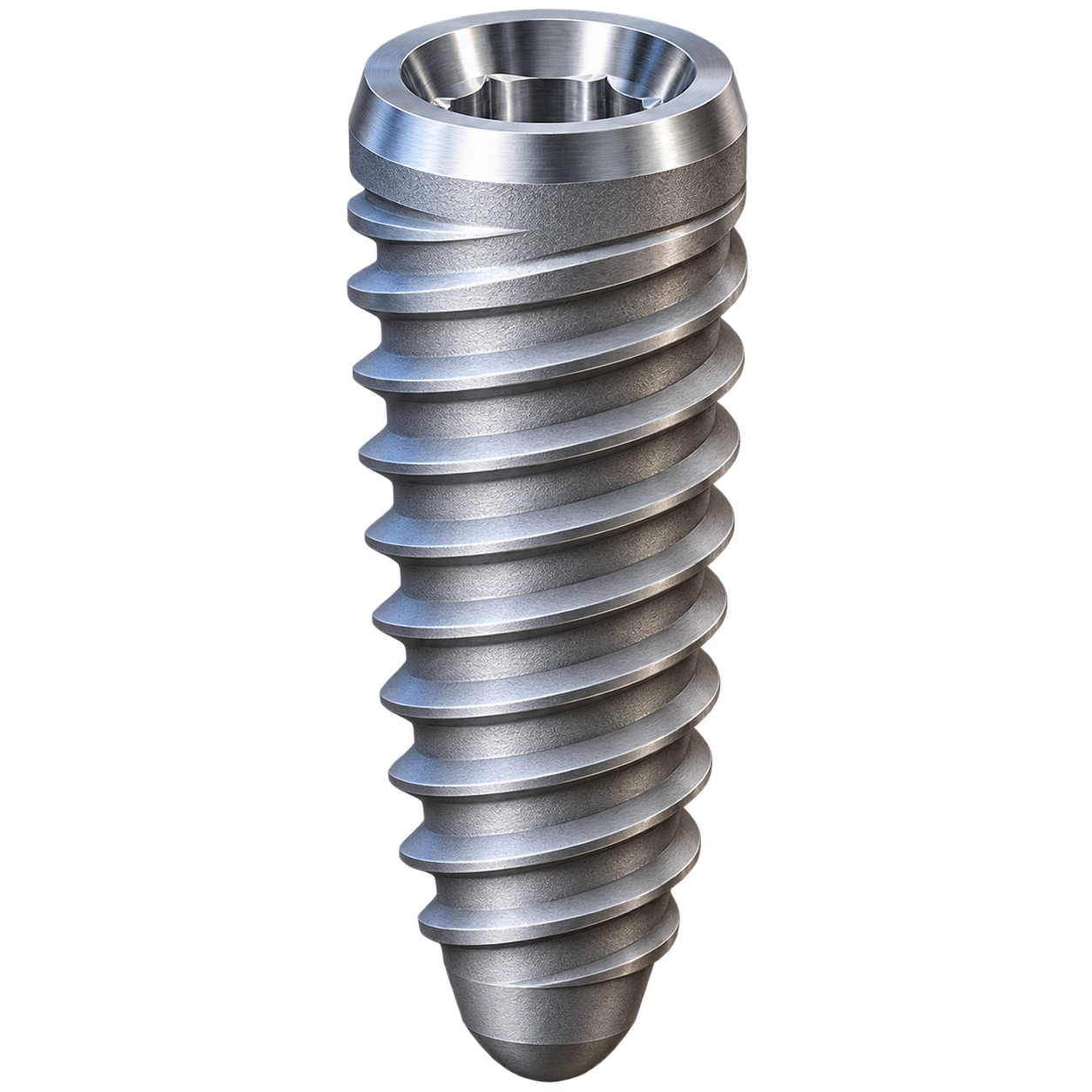
An artificial tooth root placed in the jawbone to support the abutment and crown above.

The threads increase the contact area and help the post integrate securely with the jawbone.

Your dentist will examine you and take scans to find the right solution for your type of tooth loss.
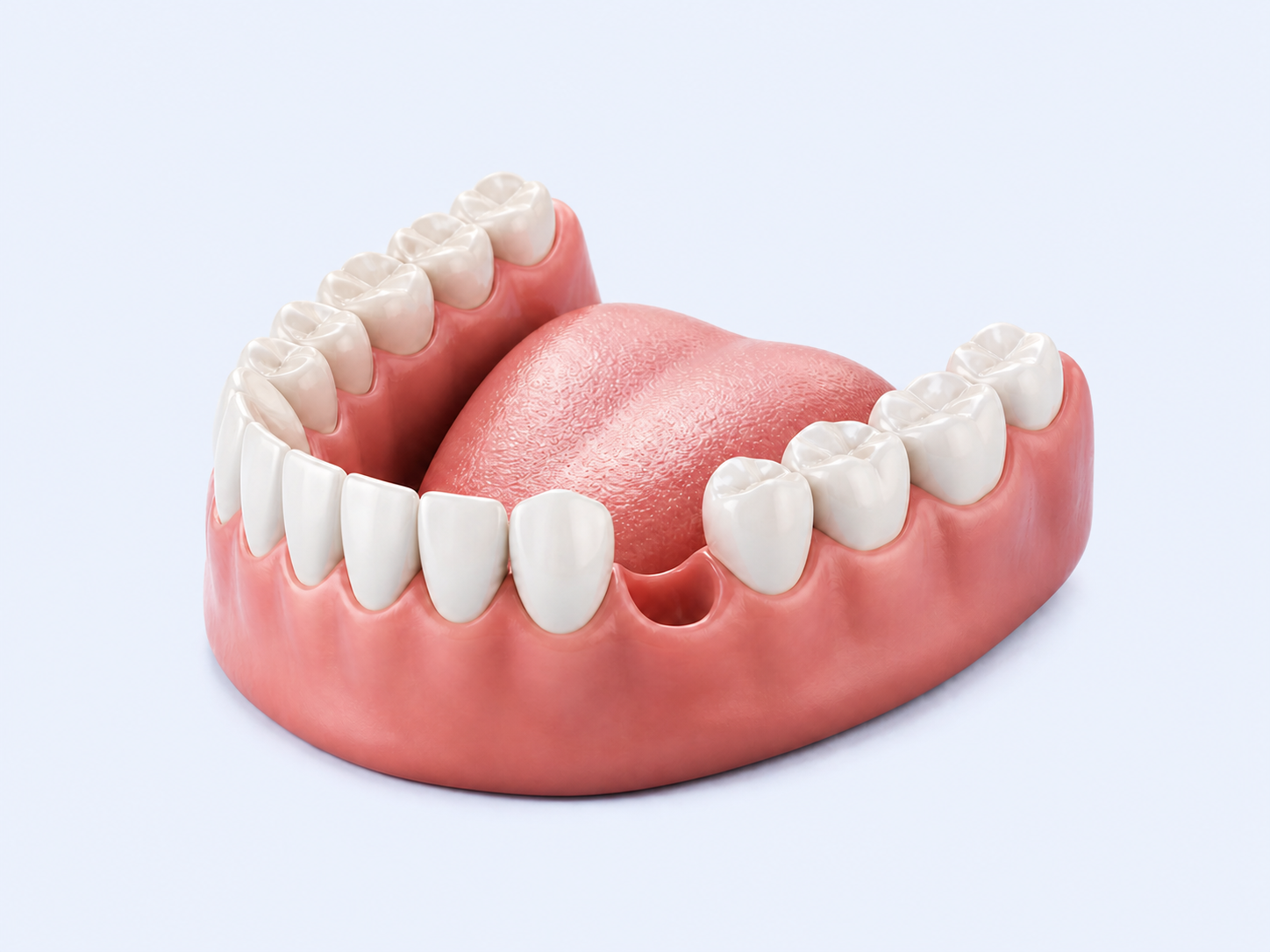
May need two implants or another option depending on position and restorative space.
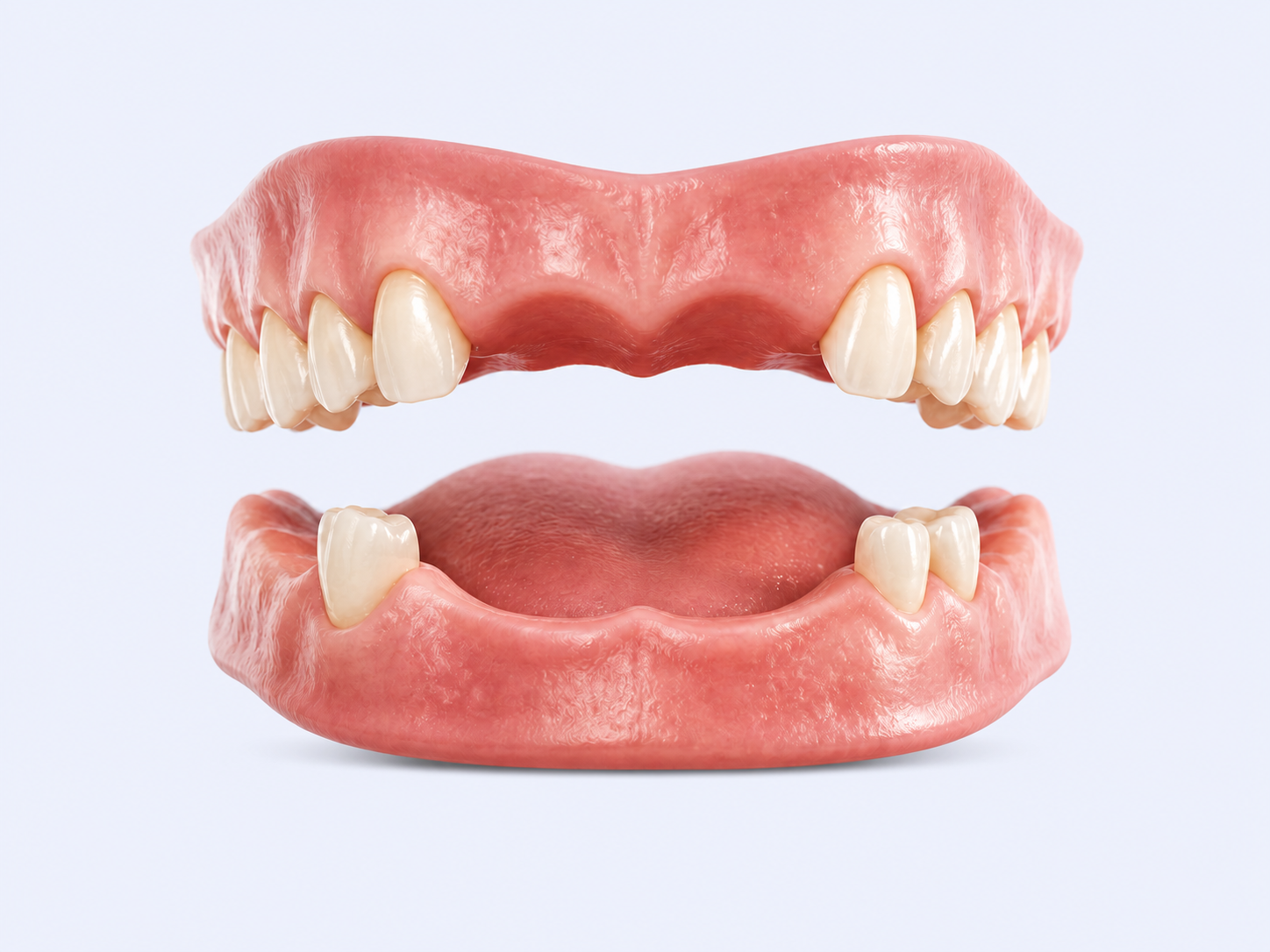
Some cases are suitable for a three-tooth bridge supported on two implants.
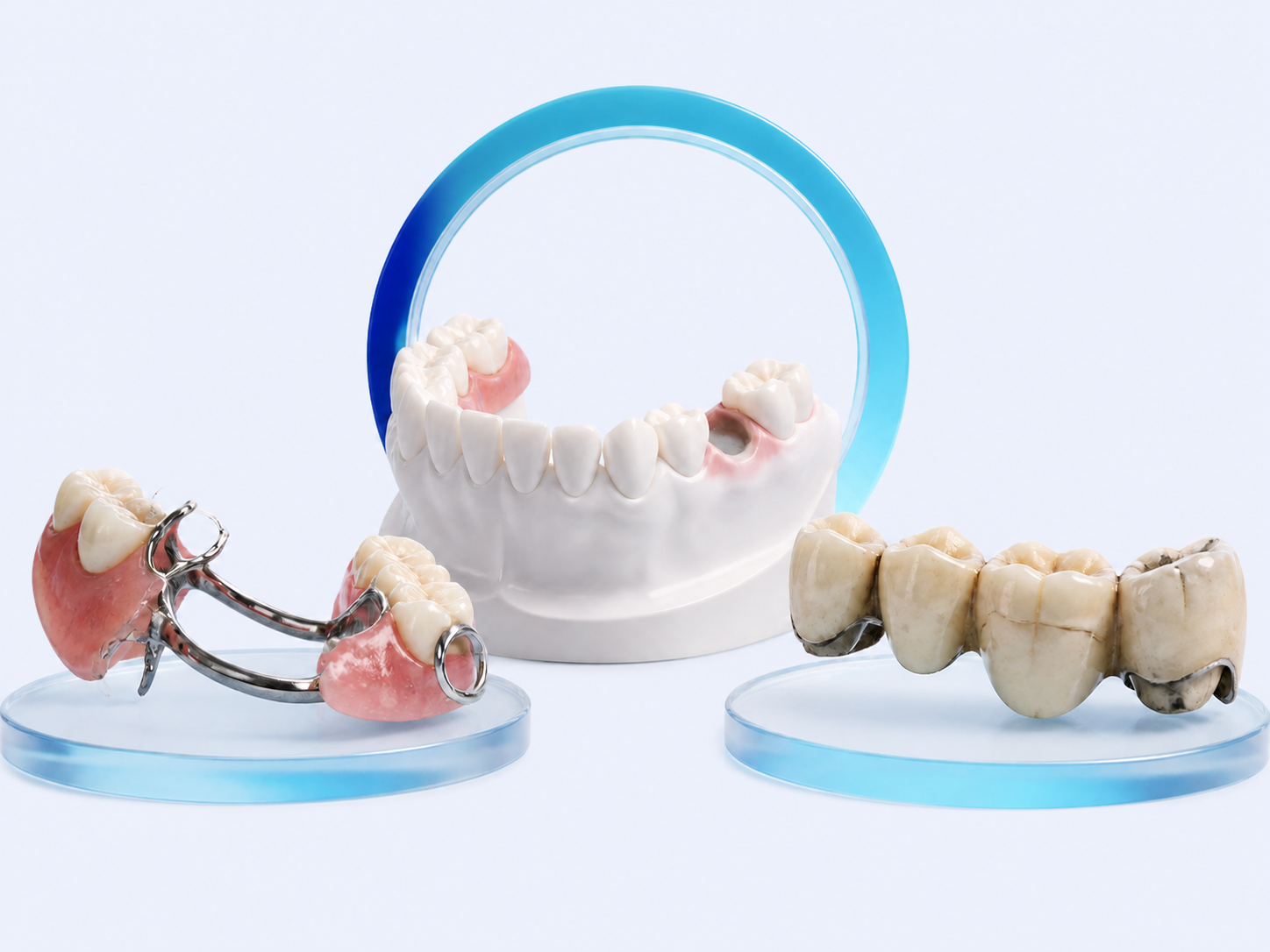
Each gap and the remaining support points in the arch need to be assessed separately.
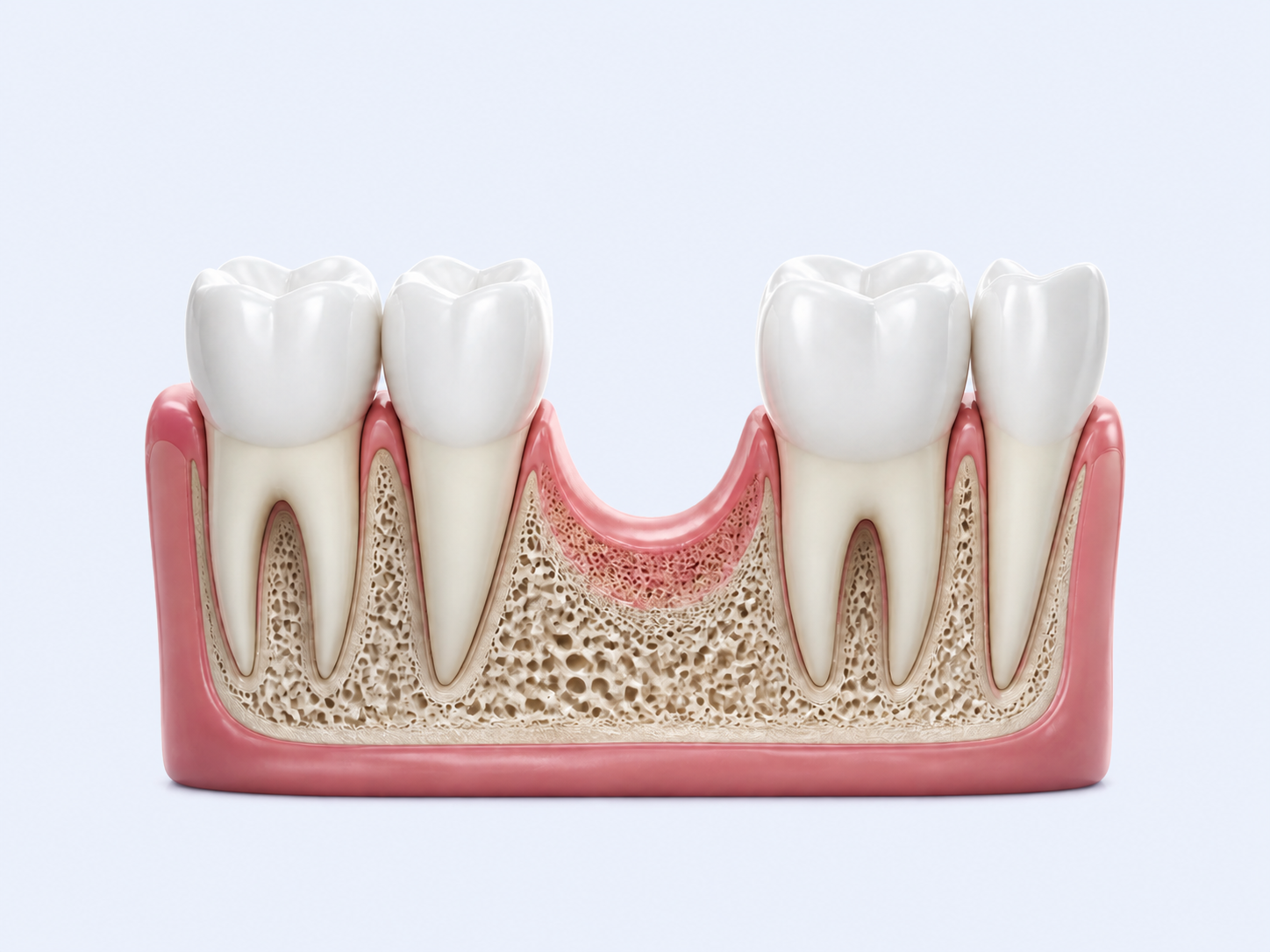
You want an option that no longer uses neighboring natural teeth as supports.

The restoration is supported by implants in the jawbone, helping restore chewing force when properly indicated and cared for.

Chewing forces transmitted through the implant keep stimulating the area and slow bone loss.
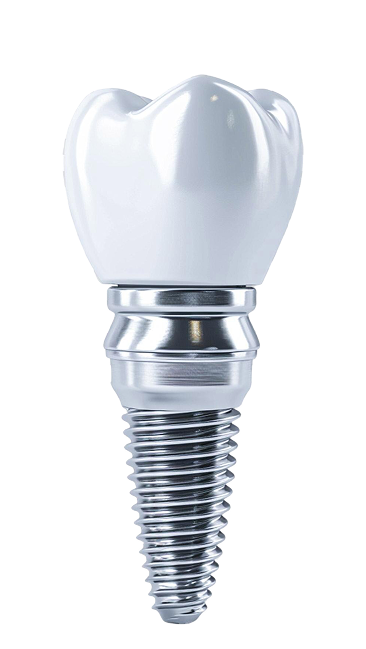

An implant works independently and usually does not rely on neighboring natural teeth like a traditional bridge.

The porcelain crown is designed to match your arch, tooth color and bite; daily care is close to that of natural teeth.
Close supervision from examination and implant placement to the final porcelain crown.
The dentist assesses your mouth, bone volume, soft tissue and general health.
Implant positions, implant brand, temporary teeth, timeline and estimated costs are agreed.
Implants are placed as planned, with aftercare guidance and check-ups to monitor osseointegration.
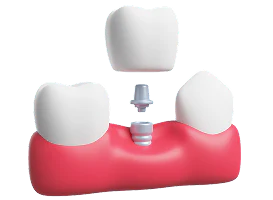
Digital impressions, bite try-in and final fitting once the implants can bear chewing forces.
Note: The time between stages depends on bone quality, healing and your dentist's assessment at each check-up.
Ask about the processFollowing your dentist's personalized instructions helps treatment and healing go more smoothly.
Share your full health history: Tell your dentist about medical conditions, current medications, allergies and previous surgeries.
Check your mouth and jawbone: Treat infections, gum disease or active decay first; take X-rays as indicated to assess the bone.
Limit smoking and alcohol: Follow the timeline your dentist recommends, as these factors can affect healing.
Prepare mentally and plan your time: Eat, rest and take medication before the procedure as instructed; arrange for someone to accompany you if needed.
Control bleeding and swelling: Bite on gauze, apply cold compresses and rest as instructed; avoid vigorous rinsing or touching the surgical area.
Take medication as prescribed: Do not increase, stop or add medication without consulting your treating dentist.
Soft foods at first: Choose soft, cool foods; avoid chewing on the surgical area and avoid very hot or hard foods.
Gentle oral hygiene: Brush and clean around the implant as instructed, and never touch the wound with sharp objects.
Attend follow-up visits on time: Contact the clinic promptly if you have prolonged bleeding, increasing pain or swelling, fever, unusual numbness or a loose restoration.
Every restoration plan is built on close cooperation between the dentist, diagnostic data and continuous care.
Dr.
Eight pillars that make your implant journey clearer, safer and more convenient.

Your dentist examines you, reads the scans and builds a plan based on your bone, gums and restoration needs.

3D images help assess bone volume, anatomical structures and implant angulation before treatment.

The number of implants, implant brand and restoration timing are decided individually for each case.

Materials with verified origin, identification details and a clear warranty policy for each implant line.

Instruments, treatment rooms and every procedural step are controlled under the clinic's safety protocols.

Check-ups are scheduled at each stage so the dentist can monitor the soft tissue and implant stability.

Expected items are explained before treatment and updated if the plan needs to change.

Guidance on hygiene, diet and regular check-ups helps your implant restoration last.
With many years of experience in dental implants, Viet Han combines formally trained dentists with modern diagnostic, surgical and prosthetic systems to build a clear treatment plan for every patient.
Real journeys of patients who started with different conditions and treatment plans at Viet Han Dental.
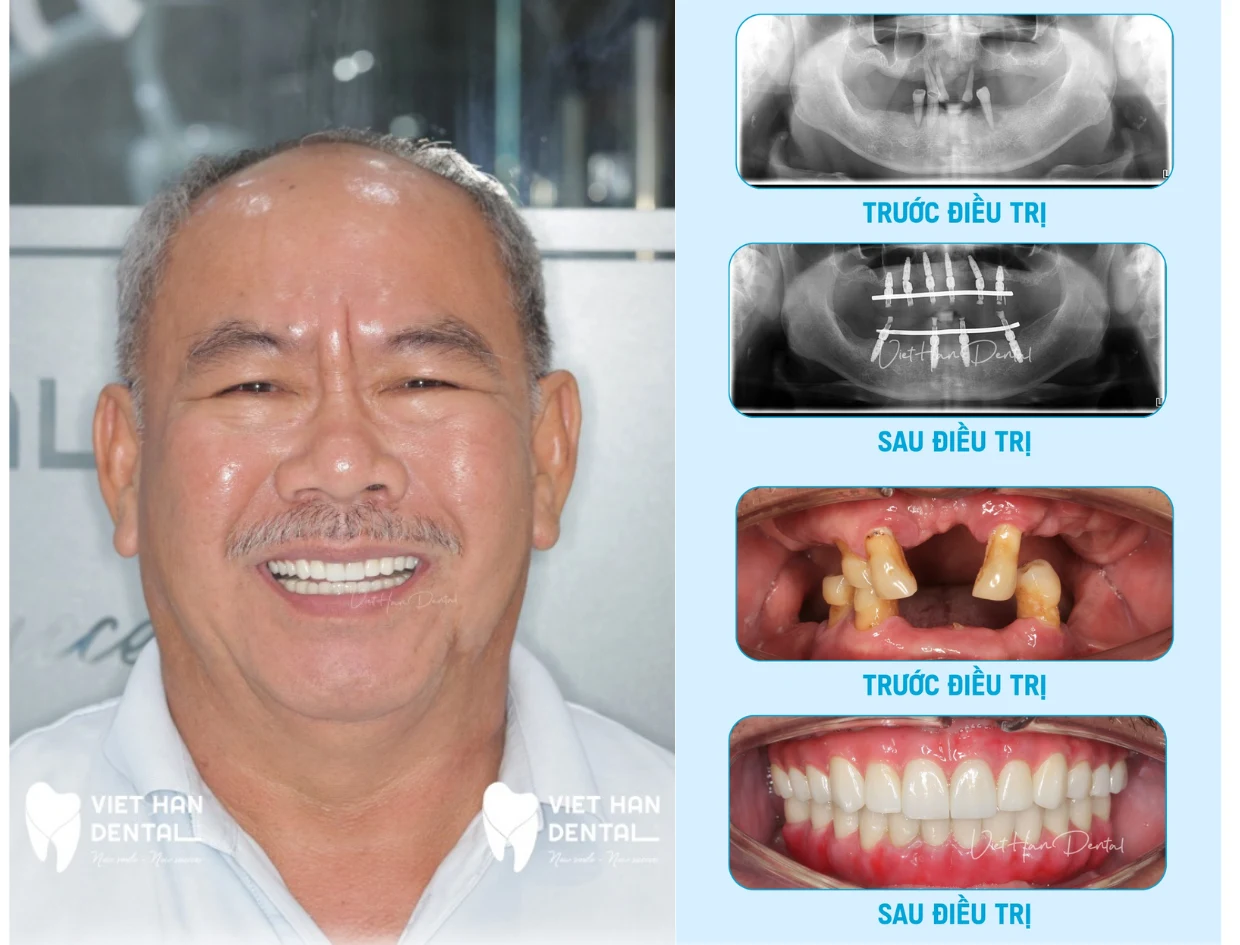
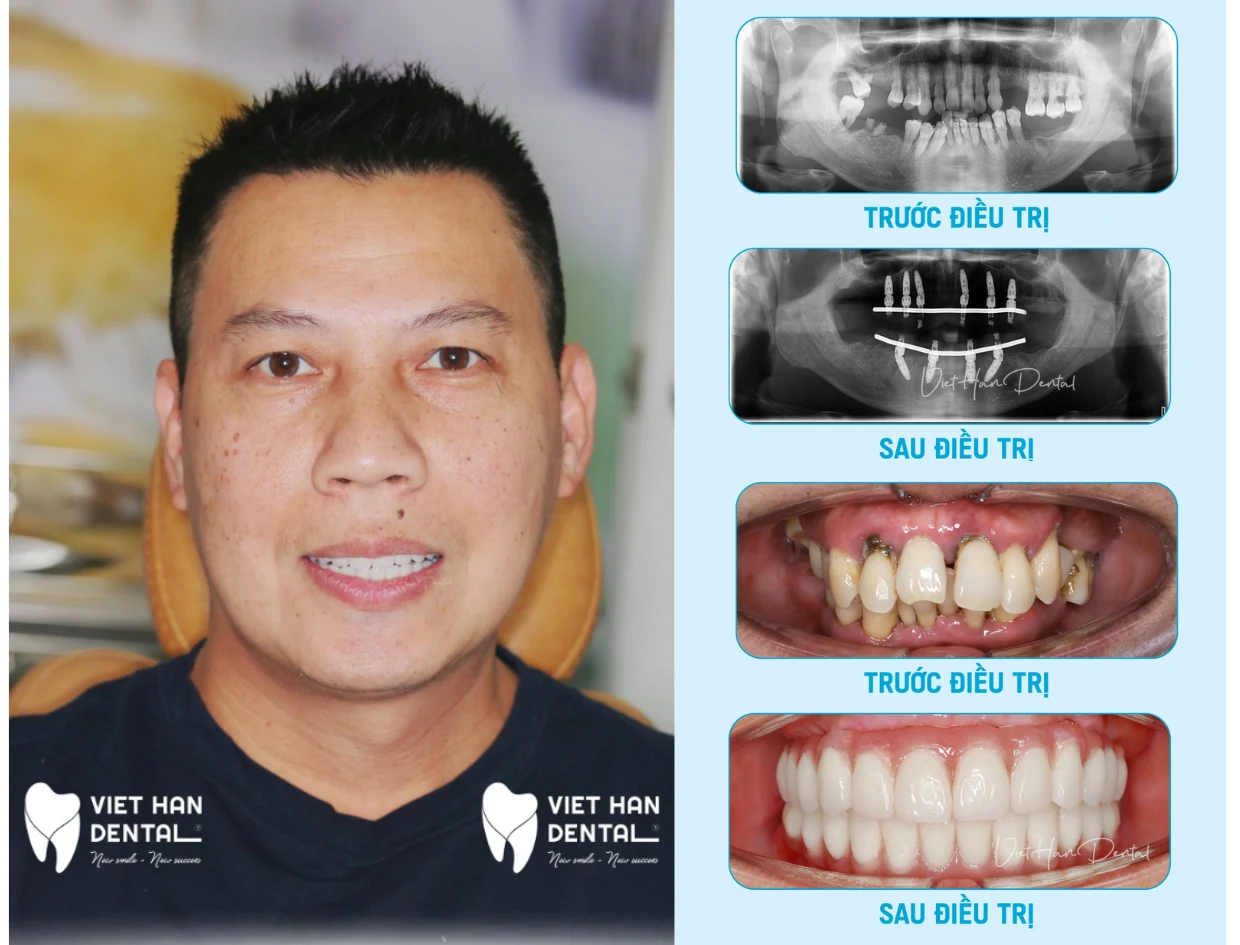
Mr. Su greatly appreciated the dedication of Dr. Quan, the care team, and the clinic's space and equipment.
All-on-6 upper jaw · All-on-4 lower jaw
Long-term tooth loss made eating difficult, affected his daily life and left him unsure where to seek treatment.
The dentist planned a fixed restoration with All-on-6 on the upper jaw and All-on-4 on the lower jaw, based on the examination and X-rays.
After treatment, he chews more comfortably, his smile looks more balanced and he feels at ease enjoying time with his family.
Costs are based on the actual number of implants, abutments, crowns and any supporting procedures; one tooth does not automatically mean one implant.
| Restoration | Details | Cost |
|---|---|---|
Reference implant prices | ||
| Dio Implant (South Korea) + Abutment | Warranty 7 years | 12,900,000 VND |
| Neodent Implant (Switzerland) + Abutment | Warranty 10 years | 19,900,000 VND |
| STRAUMANN Implant BLT – SLA (Switzerland) + Abutment | Warranty 15 years | 32,000,000 VND |
| STRAUMANN Implant BLT – SLActive (Switzerland) + Abutment | Warranty 15 years | 34,000,000 VND |
Additional costs when indicated | ||
| Standard metal-porcelain crown on implant | Warranty 5 years | 6,000,000 VND / tooth |
| Premium all-porcelain crown on implant | Warranty 10 years | 9,000,000 VND / tooth |
| Bone grafting / Barrier membrane grafting | As clinically indicated | 5,000,000 VND – 10,000,000 VND / tooth |
| Surgical guide template | First implant | 2,000,000 VND |

Every need is examined and planned individually to protect your long-term oral health.
Common questions before choosing a dental implant restoration.
Not necessarily. In suitable cases, the dentist may recommend 2 implants supporting a 3-tooth bridge to balance function and cost.
Yes, if the position, bone quality, gap and bite allow it. The dentist needs to calculate this from CT scans and clinical data.
A bridge on implants is supported by artificial roots and does not require grinding the natural teeth on either side. You can ask your dentist to show which parts are supports and which are replacement teeth in each option.
It is best to get checked early to limit tooth shifting and bone loss. The exact timing of implant placement also depends on inflammation, bone and general health.
Note when you lost your teeth, any chewing difficulties, previous treatments and your goals. Bring old X-rays or records if you have them, along with a list of medications, medical conditions and allergies.
Ask your dentist to show you how to clean around each implant and restoration with tools suited to your design. Keep the agreed check-up schedule and get in touch early if cleaning is difficult, you notice bleeding, a change in your bite or a loose restoration.